
Poker has become one of the most recognized card games across the world, combining skill, strategy, and psychology. It attracts casual players and professionals alike, both online and at live tables. Poker challenges players to make smart decisions under pressure while reading opponents and managing risk.
The game’s appeal lies in its balance of luck and skill. Each hand offers new possibilities, whether it’s Texas Hold’em, Omaha, or another variant. Players must understand the rules, hand rankings, and betting structure to compete effectively.
As technology advances, online platforms have made poker more accessible than ever, while live tournaments continue to draw global attention. This article explores how poker works, what makes it unique, and how players can improve their understanding of the game.
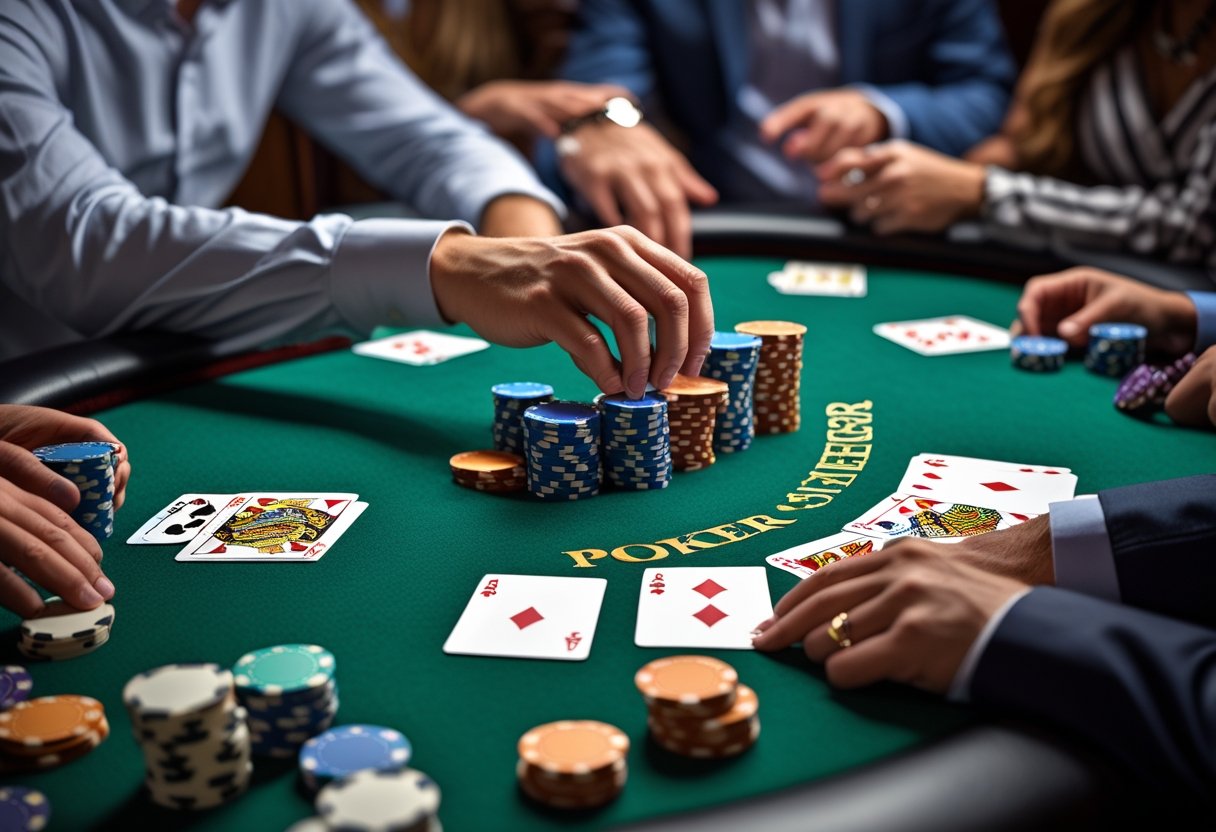
What Is Poker?
Poker is a card game that mixes skill, strategy, and chance. Players compete by forming the best hand or convincing others to fold through betting and bluffing. It has evolved over centuries into many forms, with Texas Hold’em being the most widely played version today.
Definition of Poker
Poker is a family of card games where players wager based on the strength of their hands. Most versions use a standard 52-card deck, and players bet using chips that represent money.
Each game round includes betting phases, where players choose to call, raise, or fold. The goal is to win the pot, which contains all bets made during the hand.
Poker combines probability, psychology, and strategy. Players must judge the odds of winning, read opponents’ behavior, and decide when to bet or fold.
Common poker variants include:
- Texas Hold’em
- Omaha
- Seven-Card Stud
- Five-Card Draw
Though rules differ, all share the same core idea: comparing hands to determine a winner.
Brief History of Poker
Poker’s origins trace back to the early 19th century in the United States, likely influenced by older European games like Poque from France and Pochen from Germany. Early versions used only 20 cards and were played mainly on riverboats along the Mississippi River.
By the mid-1800s, the game expanded to a 52-card deck, introducing new hand rankings and betting rules. The American Civil War helped spread poker across the country, and variations such as Stud Poker and Draw Poker emerged.
In the 20th century, poker moved into casinos and private clubs. The World Series of Poker (WSOP), first held in 1970, made it a recognized competitive sport.
The rise of online poker in the late 1990s and televised tournaments in the 2000s brought the game to a global audience.
Popularity Around the World
Poker is now played in casinos, home games, and online platforms across the world. Its appeal lies in the balance between luck and skill, allowing both casual and serious players to enjoy it.
Texas Hold’em dominates international play due to its simple rules and strategic depth. Major tournaments like the WSOP and European Poker Tour (EPT) attract players from dozens of countries.
Online sites and mobile apps have expanded access, letting people play anytime. In regions like North America, Europe, and Asia, poker communities thrive both online and in live events.
This global reach has turned poker into one of the most recognized and enduring card games in modern culture.

Poker Rules and Gameplay

Poker uses a mix of strategy, skill, and chance. Players make decisions based on hand strength, betting actions, and shared cards to win chips or money from opponents.
Basic Rules of Poker
Poker usually uses a standard 52-card deck. Each player receives cards, either face down (hole cards) or shared on the table (community cards). The goal is to form the best five-card hand or make others fold before the showdown.
A game begins with forced bets, called the small blind and big blind, which start the pot. Players act in turn, choosing to fold, call, check, or raise.
Most games, such as Texas Hold’em, follow the same structure. Players try to make the strongest hand possible using their hole cards and the community cards. A round ends when one player remains after all others fold or when hands are revealed to decide the winner.
Hand Rankings
Poker hand strength determines who wins at showdown. The ranking from highest to lowest is:
| Rank | Hand Name | Description |
|---|---|---|
| 1 | Royal Flush | A, K, Q, J, 10 of the same suit |
| 2 | Straight Flush | Five cards in sequence, same suit |
| 3 | Four of a Kind | Four cards of the same rank |
| 4 | Full House | Three of a kind + a pair |
| 5 | Flush | Five cards of the same suit |
| 6 | Straight | Five cards in sequence, any suits |
| 7 | Three of a Kind | Three cards of the same rank |
| 8 | Two Pair | Two different pairs |
| 9 | One Pair | Two cards of the same rank |
| 10 | High Card | Highest single card if no other hand forms |
If two players have the same hand type, the highest card decides the winner.
Betting Rounds
Poker betting occurs in several rounds. In Texas Hold’em, these are pre-flop, flop, turn, and river. Each round gives players a chance to bet, check, call, raise, or fold.
The pre-flop starts after players get their hole cards. The flop reveals three community cards, followed by the turn and river, which add one card each.
Betting continues clockwise until all active players have matched the highest bet or folded. The remaining players compare hands at the showdown, and the best hand wins the pot.
Popular Poker Variants
Poker includes several main game types that differ by how cards are dealt, shared, and revealed. Each version changes the strategy, betting style, and pace of play, giving players unique ways to test skill and judgment.
Texas Hold’em
Texas Hold’em uses two private cards per player and five shared community cards. Each player aims to make the best five-card hand using any combination of their hole cards and the community cards.
The game has four betting rounds: pre-flop, flop, turn, and river. Players can check, bet, call, raise, or fold during each round.
Because players share most of the cards, reading opponents’ actions and betting patterns is key. Hold’em is the most widely played poker variant, both in live casinos and online, and it’s the main format used in major tournaments like the World Series of Poker.
Omaha
Omaha resembles Texas Hold’em but gives each player four hole cards instead of two. To form a hand, players must use exactly two of their hole cards and three community cards.
This rule creates more possible combinations, which increases the likelihood of strong hands. As a result, pots often grow larger, and players must manage risk carefully.
Popular versions include Pot-Limit Omaha (PLO) and Omaha Hi-Lo, where the pot divides between the highest and lowest qualifying hands. Omaha rewards careful hand selection and strong positional play since the action can shift quickly with each community card.
Seven Card Stud
Seven Card Stud does not use community cards. Each player receives a mix of face-up and face-down cards over several betting rounds.
A typical hand starts with two cards down and one up, followed by additional cards until players hold seven total. The best five-card combination wins.
Because some cards are visible, players can track folded cards and estimate opponents’ possible hands. This game emphasizes memory, observation, and patience. While less common in casinos today, it remains popular among traditional poker players who prefer slower, more analytical gameplay.
Draw Poker
In Draw Poker, each player receives a complete hand that remains hidden from others. The most common form is Five Card Draw.
Players can discard and replace some cards after the first betting round to improve their hands. This simple structure makes it easy for beginners to learn but still allows for bluffing and strategy.
Draw Poker focuses on reading opponents and managing limited information. Because no cards are shared, success depends on judging betting behavior and making accurate guesses about what others hold.
Poker Strategy Fundamentals
Strong poker play depends on understanding how seat position affects decision-making, how to apply controlled bluffing, and how to manage chips responsibly to avoid unnecessary risk. These skills help players make informed choices and maintain long-term consistency at the table.
Position and Table Dynamics
Position determines the order of play during a hand. Acting later gives a player more information about others’ actions, which helps them make better decisions. Early positions require tighter play because fewer details are known about opponents’ hands.
Table dynamics refer to how players interact. Observing betting patterns, speed of play, and aggression helps identify weak or strong opponents. Recognizing these patterns allows players to adjust their own strategies.
A simple guide:
| Position | Example Seats | Recommended Play Style |
|---|---|---|
| Early | Under the Gun (UTG) | Tight, strong hands only |
| Middle | MP1–MP3 | Moderate range, cautious |
| Late | Cutoff, Button | Wider range, more aggression |
Good players use position to control pot size and apply pressure when they have an informational advantage.
Bluffing Techniques
Bluffing works best when used selectively and supported by logical betting patterns. A bluff should tell a believable story about a strong hand. Random or frequent bluffs lose credibility and waste chips.
Key bluffing types:
- Continuation bluff: Betting after raising preflop to represent strength.
- Semi-bluff: Bluffing with a drawing hand that can still improve.
- Pure bluff: Betting with no real chance to win unless opponents fold.
Timing and table image matter. Players who appear tight and consistent are more likely to succeed when bluffing. Bluffing against observant opponents requires careful planning, while less experienced players may call too often, making bluffs less effective.
Bankroll Management
Bankroll management keeps players from losing all their funds during downswings. A player should only risk a small portion of their total bankroll in one game or tournament.
Common guidelines include:
- Keep at least 20–30 buy-ins for cash games.
- Hold 50–100 buy-ins for tournaments due to higher variance.
Tracking wins and losses prevents emotional decisions. Players who manage their bankroll well can handle losing streaks calmly and stay in the game longer. Maintaining discipline protects both confidence and financial stability.
Advanced Poker Concepts
Strong poker players rely on math, observation, and logic to make consistent decisions. They measure value, study patterns, and adjust their play to match different opponents and game conditions.
Pot Odds and Expected Value
Pot odds compare the size of the pot to the cost of a call. Players use this ratio to decide if a call is profitable in the long run. For example, if the pot is $100 and a player must call $20, the pot odds are 5:1.
Expected value (EV) measures the average amount a player expects to win or lose on a decision. Positive EV (+EV) means the action is profitable over time, while negative EV (−EV) means it loses money in the long run.
Key steps to apply EV:
- Estimate the chance of winning.
- Multiply the chance by the pot size.
- Subtract the cost of the call.
Players who understand pot odds and EV make fewer emotional decisions and rely more on numbers than instinct.
Reading Opponents
Reading opponents involves noticing patterns in betting behavior, timing, and body language. Skilled players track how often others raise, call, or fold in certain spots. These observations help them identify whether an opponent plays tight, loose, passive, or aggressive.
Online players rely on bet sizing, timing tells, and showdown history instead of physical cues. For example, a sudden large bet after a slow check may signal strength or a bluff depending on the player’s usual style.
A simple table helps organize reads:
| Behavior | Likely Meaning |
|---|---|
| Quick call | Weak draw or marginal hand |
| Long pause then raise | Strong hand or bluff attempt |
| Small bet after flop | Weak hand or probe bet |
Accurate reads allow players to adjust strategy and exploit predictable patterns.
Game Theory Optimal Play
Game Theory Optimal (GTO) play focuses on balance. A GTO player mixes bluffs and value bets so opponents cannot easily exploit their strategy. They aim to make each decision mathematically sound, even if opponents do not play perfectly.
GTO uses range-based thinking rather than focusing on single hands. Instead of guessing one exact hand, players consider all possible hands that fit an opponent’s actions.
While pure GTO is complex, understanding its principles helps players defend against aggressive or unpredictable opponents. Many use a hybrid approach—playing close to GTO while adjusting to exploit clear mistakes. This balance keeps their strategy solid and adaptable in any game setting.
Online Poker
Online poker uses internet platforms where players compete in real money or free games. It offers flexible play options, a wide range of stakes, and access to global tournaments that attract both beginners and professionals.
Online Poker Platforms
Online poker platforms host digital versions of popular games like Texas Hold’em, Omaha, and Seven-Card Stud. Players can join cash games, scheduled tournaments, or sit-and-go events. Sites such as PokerStars, Bovada, and other licensed operators in the U.S. provide regulated environments for real money play.
Most platforms include features that track performance, manage bankrolls, and allow players to join multiple tables at once. Clear interfaces, mobile apps, and fast deposit methods make participation accessible.
Many sites offer welcome bonuses, loyalty rewards, and freeroll tournaments to attract new players. However, players should review terms carefully, as bonus conditions vary by site and jurisdiction.
| Feature | Description |
|---|---|
| Game Variety | Hold’em, Omaha, Stud, and mixed formats |
| Play Options | Cash games, tournaments, sit-and-gos |
| Access | Desktop, mobile apps, and web browsers |
Differences Between Online and Live Poker
Online poker differs from live play mainly in pace, environment, and interaction. Digital games move faster because there are no physical dealers or chip handling. Players can see more hands per hour, which affects strategy and decision-making.
In live poker, reading body language and table presence matters. Online, players rely on betting patterns, timing, and statistics instead. Tools like HUDs (heads-up displays) help analyze opponents’ habits, giving experienced players data-driven insights.
The convenience of online play allows participants to join games anytime from home, but it also removes the social element found in casinos or card rooms. Many players balance both formats to improve adaptability and skill.
Security and Fair Play
Licensed poker sites use encryption technology and secure payment systems to protect user data and funds. Reputable operators hold gaming licenses from recognized authorities, ensuring compliance with fair gaming standards.
Random Number Generators (RNGs) guarantee that cards are dealt fairly. Independent agencies regularly audit these systems to maintain transparency.
Players should enable two-factor authentication, use strong passwords, and avoid unregulated sites. Responsible gaming tools, such as deposit limits and self-exclusion options, help maintain control and prevent misuse.
Reliable platforms also monitor for collusion, bot activity, and multi-accounting to ensure a fair environment for all participants.
Live Poker Tournaments
Live poker tournaments bring together players from around the world to compete for structured prize pools and titles. These events vary in size, format, and buy-in levels, offering both professionals and amateurs a chance to test their skills in a regulated, high-stakes environment.
Major Poker Tournaments
The World Series of Poker (WSOP) is the most recognized live tournament series. It takes place annually in Las Vegas and features dozens of events, including the $10,000 Main Event. Winners receive a gold bracelet and often millions in prize money.
The World Poker Tour (WPT) hosts televised tournaments across the globe. Each stop offers unique buy-ins, formats, and championship points that contribute to season rankings.
Another major event is the European Poker Tour (EPT), organized by PokerStars. It draws large fields in cities like Barcelona, Prague, and Monte Carlo. These tournaments attract both seasoned players and newcomers seeking international competition.
| Tournament | Location | Typical Buy-in | Notable Feature |
|---|---|---|---|
| WSOP | Las Vegas, USA | $400–$10,000+ | Gold bracelet awards |
| WPT | Global | $1,000–$25,000 | Televised final tables |
| EPT | Europe | €1,100–€10,300 | Prestigious venues |
Tournament Structure
Most live poker tournaments use a freezeout format, meaning players cannot re-enter once they lose all their chips. Some events allow rebuys or re-entries, giving players another chance early in the competition.
Each event has blind levels that increase over time, forcing action as chip stacks shrink relative to the blinds. Players advance through rounds until a final table remains.
Payouts depend on the number of entries and the buy-in amount. Typically, the top 10–15% of the field earns a share of the prize pool. The last player standing wins the largest portion and the title.
Famous Poker Players
Several professional players have built reputations through consistent live tournament success. Phil Hellmuth holds the record for the most WSOP bracelets, showing long-term dominance.
Daniel Negreanu is known for his strategic insight and ability to read opponents, with multiple major titles across WSOP and WPT events.
Doyle Brunson, a two-time WSOP Main Event champion, helped shape modern poker strategy. Vanessa Selbst stands out as one of the most successful female players, earning millions in live tournaments.
These players represent different eras but share traits of discipline, patience, and adaptability that define top-level live poker performance.
Poker Etiquette and Ethics
Good poker play depends on more than skill. Players must respect the game, act responsibly, and avoid any behavior that gives them an unfair advantage or disrupts others at the table.
Table Etiquette
Poker etiquette helps maintain fairness and a pleasant atmosphere. Players should act in turn, avoid slow play, and keep their actions clear. Throwing chips or cards aggressively, known as splashing the pot, makes it hard for others to follow the game and is considered rude.
Respect for the dealer and other players is essential. Using polite language, managing emotions, and keeping conversation appropriate prevent conflicts. Players should also protect their own cards and chips, keeping them visible and organized.
Common etiquette reminders:
- Don’t comment on a hand in progress.
- Avoid revealing folded cards.
- Keep phones silent and distractions minimal.
- Congratulate winners and accept losses calmly.
Responsible Gaming
Responsible gaming means playing within limits and keeping poker enjoyable. Players should set time and money boundaries before starting and stick to them. Chasing losses often leads to stress and poor decisions.
Good players recognize when to take breaks. Fatigue and frustration reduce focus and raise the risk of mistakes. Many poker rooms and online sites offer tools like deposit limits and self-exclusion options to help manage play responsibly.
Key habits for responsible play:
| Habit | Purpose |
|---|---|
| Set a budget | Avoid financial strain |
| Take breaks | Maintain focus |
| Track results | Identify problem patterns |
| Play for fun | Keep perspective |
Responsible gaming protects both the player and the integrity of the game.
Cheating and Collusion
Cheating undermines trust and fairness. It includes marking cards, stacking the deck, or using hidden devices to gain an advantage. Collusion occurs when players secretly share information or coordinate actions to cheat others.
Casinos and online platforms monitor games closely, but players also share responsibility. Reporting suspicious behavior helps maintain fair play. Honest players should never discuss their hands with others still in play or signal information through gestures.
Unethical actions to avoid:
- Sharing hole cards
- Soft playing against friends
- Signaling through coded words or gestures
- Using software to track opponents unfairly
Ethical poker relies on transparency, honesty, and respect for the rules that keep the game fair for everyone.
Poker in Popular Culture
Poker has become a recognizable part of entertainment, appearing in films, television, and celebrity circles. It represents skill, strategy, and confidence, shaping how people view both the game and those who play it.
Poker in Movies and Television
Poker scenes often highlight tension, intellect, and risk. Films such as Rounders (1998) and Casino Royale (2006) helped define the modern image of poker as a contest of strategy rather than luck. These portrayals show players reading opponents, hiding emotions, and calculating odds under pressure.
Television also expanded poker’s reach. The World Series of Poker broadcasts and shows like High Stakes Poker made real tournaments accessible to viewers. Camera angles showing players’ hole cards turned a private game into a spectator event.
These depictions helped normalize poker as part of mainstream entertainment, connecting it to both competition and storytelling.
Notable Examples in Media
| Title | Year | Impact |
|---|---|---|
| Rounders | 1998 | Portrayed poker as a skill-based pursuit |
| Casino Royale | 2006 | Linked poker to sophistication and suspense |
| High Stakes Poker | 2006–2011 | Popularized televised cash games |
Famous Poker Moments
Certain poker moments have influenced how the public perceives the game. Chris Moneymaker’s 2003 World Series of Poker win, achieved through an online qualifier, sparked a global poker boom. His victory showed that an amateur could compete with professionals.
Historic hands, such as Johnny Chan’s bluff against Erik Seidel in Rounders, became part of poker lore. Televised tournaments often replay these hands to illustrate skill and nerve.
These events made poker relatable and exciting, encouraging new players to join both online and live games. They also highlighted the psychological side of poker, where reading people can matter more than the cards themselves.
Poker and Celebrity Influence
Celebrities helped bring poker into lifestyle culture. Actors, athletes, and musicians often play in charity tournaments and televised games, drawing attention from fans who might not follow traditional poker events.
Famous figures like Ben Affleck and Tobey Maguire have participated in high-stakes games, linking poker with glamour and exclusivity. Meanwhile, professional players gained celebrity status themselves, appearing on talk shows and endorsements.
This crossover between entertainment and poker blurred the line between competition and leisure. It reinforced poker’s image as a social game that rewards focus, patience, and confidence rather than pure chance.
The Future of Poker
Poker continues to evolve through new technology, global participation, and changing laws. Players now use advanced tools to study strategy, while digital platforms expand access and reshape how people experience the game.
Technological Innovations
Technology now drives much of poker’s growth. Artificial intelligence (AI) tools analyze hands and help players improve through data-driven feedback. Programs like GTO solvers simulate millions of scenarios to refine decision-making and balance playing ranges.
Virtual reality (VR) poker creates realistic online environments. Players can interact at 3D tables, read body language, and experience social aspects once limited to live games. Mobile apps and faster internet connections make these experiences accessible to more users.
Blockchain and cryptocurrency bring secure payments, transparent transactions, and provably fair gameplay. These systems reduce fraud and attract players who value privacy and efficiency. Together, these innovations make poker more analytical, immersive, and inclusive.
Global Trends
Poker’s audience continues to expand worldwide. Online platforms now reach players in regions where live poker once had limited presence. Asia, South America, and parts of Africa are seeing rapid growth in both casual and competitive play.
Live streaming and poker vlogs on platforms like Twitch and YouTube create new communities. Viewers learn strategies, follow tournaments, and engage with professional players. This exposure helps attract younger audiences who prefer digital entertainment.
Emerging trends include:
- Cross-platform play between mobile and desktop users
- AI-powered coaching and personalized training
- Hybrid tournaments combining live and online entries
These trends make poker more accessible and help sustain its popularity across cultures and generations.
Regulation and Legal Landscape
Poker’s legal environment continues to shift as governments adapt to online gaming. Some countries have legalized and taxed online poker to regulate fair play and generate revenue. Others maintain restrictions due to gambling laws or concerns about addiction.
Regulators now focus on player protection, identity verification, and anti-money laundering measures. Licensing bodies require operators to use secure systems and responsible gaming tools. These include deposit limits, self-exclusion options, and data transparency.
In the United States, more states are joining shared liquidity networks that allow players from multiple regions to compete together. This cooperation strengthens the market and encourages safer, more consistent standards worldwide.
Frequently Asked Questions
Poker involves skill, strategy, and understanding of rules that guide how players bet, win, and manage their hands. It includes several game types, each with unique formats and betting styles that appeal to both new and experienced players.
What are the basic rules of playing poker?
Players aim to make the best hand possible using a combination of dealt cards and community cards. Each game begins with forced bets such as blinds or antes. Players take turns to call, raise, or fold based on their cards and confidence in winning the pot.
How do you determine the winner of a hand?
At the showdown, players compare their five-card hands according to standard hand rankings. The player with the highest-ranking hand wins the pot. If all others fold before the showdown, the last remaining player wins without revealing their cards.
What strategies can improve your chances of winning at poker?
Good players manage their bankroll, pay attention to opponents’ betting patterns, and play selectively based on position and hand strength. They avoid emotional decisions and adjust their tactics depending on the table’s pace and player behavior.
Can you play poker with real people online for free?
Yes. Many online platforms offer free poker games where players compete against others using virtual chips. These games help beginners learn rules and strategies without risking real money.
What are the different variants of poker games available?
Popular variants include Texas Hold’em, Omaha, Seven-Card Stud, and Five-Card Draw. Each version changes how cards are dealt and how players form their hands. Texas Hold’em remains the most widely played both online and in live settings.
How does the betting structure work in poker?
Poker uses several betting formats: fixed-limit, pot-limit, and no-limit. In fixed-limit games, bet sizes are set; in pot-limit, bets can go up to the current pot size; and in no-limit, players may wager all their chips at any time.